This series of Work That Reconnects Training videos was created by Joanna Macy in 2005. It includes a comprehensive framing of the foundational teachings and spiral of WTR in addition to explanations and demonstrations of many of the core practices that make up this transformational body of group work. It is a great resource for emerging facilitators who want to become more familiar with the practices and learn from Joanna’s brilliant example.


In this bundle of videos you get to hear directly from Joanna and see her in action as a WTR facilitator.

Challenges and Blessings

This exercise was created during a five-day workshop in Madison, WI, shortly after the courageous, yet unsuccessful, effort to recall (vote him out of office before his term was completed) the Wisconsin state governor.

It was also inspired by the book Thanks! How Practicing Gratitude Can Make You Happier, by Robert A. Emmons.

“When we remember how difficult life used to be and how far we have come, we set up an explicit contrast in our mind, and this contrast is fertile ground for gratitude.” 

– R. Emmons

Participants in this workshop had all been impacted in some way by the recall effort and the legislative upheavals leading up to the recall. People expressed discouragement, burn out, disillusionment and hopelessness. We found that this practice helped people honor and share their experience of this difficult time and then find the gifts, both outer and inner, that came from living through it.

Some participants told me that they felt real resistance around looking at the recall issue because they had been so overwhelmed with it and just wanted to put it behind them. But once they did the practice, they were surprised at how much better and invigorated they felt. It helped them find the blessings and also helped them heal.


Instructions:

Invite each participant to pick one situation or issue that is challenging or difficult for them. It can be something they are dealing with now or something in their recent past. It can be personal challenge or a social/environmental/political/Great Unraveling issue.

Depending on the amount of time you have, divide into groups of four, three or in pairs. One person speaks while the others in the group listen without comment or prompting. Each person speaks to both parts of the exercise before moving on to the next person.

The facilitator will keep time and let participants know when it’s time to switch prompts and people.


1. Recalling the Difficult: Allow 4-5 minutes for each person to remember their experiences of the challenge they faced.

2. Connecting to Gratitude: Allow 4-5 minutes for each person to explore the things they can be grateful for (blessings that arose) that came from this difficult experience.


If you have time, let each group share impressions of the exercise together and then come back into the larger group for sharing. Or share just in the larger group.

Joanna Macy on Finding an Ally in Death – Courage, Creativity, and High-Hearted Presence in Death

In this special interview, Joanna Macy explores and imparts essential wisdom revealed through her conscious allyship with death. From her description of the interview, “alongside institutional collapse, we live with our personal individual dying as well. There are countless ways we can learn to let our death liberate our energies and dreams right now, and countless ways it can train us in courage, creativity and high-hearted presence. I will be sharing tips and tellings from the poet I’ve known most closely, Rainer Maria Rilke.”


This video was produced by Science and Nonduality (SAND) in 2022. Learn more at www.scienceandnonduality.com 

This practice was created by Ian Goh in 2025. Please acknowledge the source when you use any of these practices.

The Cultural Imprints of Our Bodies invites participants to witness their bodies as living archives that carry both the wounds of oppression and the seeds of collective healing. Inspired by the Decolonised Spiral of the Work that Reconnects conceived by Mutima Imani, Molly Young Brown and colleagues, this practice bridges one’s social location with existing systems of oppression through exploring the intersectional relationships that manifest in our bodies. By bringing awareness to how cultural conditioning shapes our embodied experience, we create space for both recognition and liberation. 

Method

This exercise is done in silence with eyes open. Participants are invited to notice their relationship to various aspects of their embodied experience, acknowledging both the cultural conditioning and the potential for liberation that exists within each aspect.


The skin. Look at your hands, your arms. Notice the color, tone, and texture of your skin. This skin carries stories; not just of sun exposure or genetics, but of how societies have constructed meaning around melanin. Feel into your relationship with your skin color. 

What messages did you receive growing up? 

What privileges or challenges has this skin brought you? 

Notice any feelings of pride, shame, neutrality, or complexity that arise. Your skin is not just biology, it carries the weight and gifts of cultural history, resistance, and belonging.


Body modifications and sacred markings. Notice any tattoos, scars, piercings, or other modifications on your body; whether chosen or imposed by circumstance. In many cultures, these markings carry deep spiritual significance. Colonial systems often demonize traditional body modifications while commodifying others. 

What stories do your modifications tell?

If you have chosen markings, what meaning do they hold for you?

If you have scars from injury or medical procedures, how do you relate to these marks? 

For those from cultures with traditional scarification, tattooing, or piercing practices, what is your relationship to these ancestral traditions? 

Notice any feelings about authenticity, cultural appropriation, or spiritual significance that arise.


The hair. Run your fingers through your hair, noticing colour and texture. Or touch and feel your scalp if your head is shaved or covered. Hair has been a site of cultural control and expression. In many cultures, hair carries spiritual significance, while colonial and corporate systems have created hierarchies around texture, length, and style. 

What is your relationship to your hair? 

What rules, spoken or unspoken, have you learned about how your hair should look? 

Notice any tensions between cultural authenticity and social acceptance.


Facial features. Gently touch your face; your nose, lips, cheekbones, eyes. Notice the texture of your face and its meandering contours. 

These features connect you to ancestral lineages while also positioning you within contemporary beauty standards and racial categories. 

Eurocentric beauty norms have created global hierarchies of facial features, while indigenous and many cultures in the world hold different values. 

What stories do your facial features carry? 

How have beauty standards, colorism and ageism influenced your relationship to your face?


Speech patterns. Speak a few words aloud, or simply feel your throat and voice box. 

Your voice carries accent, cadence, volume, and linguistic patterns that connect you to community and also mark you within social hierarchies. Some voices are deemed “professional” and “credible”, others “uneducated.” Some accents open doors, others close them. 

What is your relationship to your voice? 

How has code-switching, accent modification, or linguistic pride shaped how you speak? 

What voices in your lineage have been silenced or celebrated?


Body size and shape. Feel the weight and shape of your body as you sit or stand. Our relationship to our body size has been profoundly shaped by cultural ideals, pathologizing by Western medicine and consumer capitalism. Despite how different cultures across time and space have been celebrating vastly different body types. 

What messages has your culture given you about your body size? 

How has diet culture, fatphobia, or body celebration movements influenced your relationship to your physical form?

Notice and hold space for images, thoughts and feelings that arise.


Sex characteristics.* Bring gentle awareness to your chest, your genitals, your body hair, the shape of your hips or shoulders. These features carry profound cultural weight beyond their biological function. Breast size, facial hair, body hair distribution, hip-to-waist ratios – all have been assigned meaning by patriarchal beauty standards, medical pathologizing, and gender policing systems. Some cultures celebrate body hair, others demand its removal. Some honor diverse expressions of gender through the body, others enforce rigid binaries. 

What messages have you received about these aspects of your body? 

How has gender socialization shaped your relationship to these characteristics? 

For those who are trans, non-binary, or gender non-conforming, how do these features relate to the way you express yourself?

Notice any feelings of alignment, dysphoria, pride, or complexity that arise.


Space. Notice how you naturally hold your body. How much space are you taking when you are sitting? These patterns carry cultural coding about gender, class, and social position. Some bodies are conditioned to take up space like “manspreading”, others to minimize themselves. Some are seen as graceful, others as disgusting or threatening. 

How were you taught to take up space in your body? 

What cultural messages about gender, respectability, or safety have shaped your physical presence in the world?


The hands. Look again at your hands. Beyond their evolutionary gift from our primate ancestors, these hands carry the history of human labor and class systems. 

Soft hands versus calloused ones tell stories of privilege and work. 

Firm hands versus wrinkly ones tell stories of age and impermanence. 

The color and condition of hands can reveal or conceal social status. What work have your hands done? 

What messages have you internalized about “manual” versus “intellectual” labor? 

How has the dignity or shame of different types of work shaped your relationship to your own hands?


Integration. Take a moment to appreciate your body as a living archive; carrying both the wounds and wisdom of cultural conditioning, while also holding the potential for healing and liberation. Your body is not just a biological inheritance, but a cultural artifact that you can intentionally engage with, honor, and potentially transform.


Things to note

Placement in the Spiral

This practice is ideally placed after Coming from Gratitude and before Honoring our Pain for the World. Grounding in gratitude ensures participants are resourced before engaging with potentially challenging material. Exploring cultural imprints before the grief work makes explicit the existing harms and complicities in our lived experiences, connecting personal pains and collective suffering.


Open Sentences

Here are some open sentences that could be used for discussion in pairs:

  • One way my body has been valued is…
  • I became aware of these cultural beliefs when…
  • One way my body has been excluded are…
  • Towards these imprints of my body, I felt..


Emotional support

It is natural for unpleasant feelings to arise after practice. Consider these integration steps:

Invite everyone into a short guided contemplation on tantric aspects of our emotions, similar to those found in the Truth Mandala. Here’s an example:

Our sorrow is in equal measure love. We only mourn what we deeply care for.

Our fear shows our trust and courage it takes to experience it.

The anger we feel comes from the source of our passion for justice and care for nurturing Life.

To feel hopelessness is to rest in surrender, allowing space for emergence.


If you have introduced some form of Lovingkindness meditation, grounding with gratitude practice or any other somatic/trauma-informed/embodiment practices earlier in the first part of the spiral, feel free to reinforce them after this practice. 


*Be aware that exploration of sex characteristics may be inappropriate with participants consisting of mixed genders. It may also bring distress to trans and non-binary participants, especially if practising alongside cisgender participants. You may consider avoiding this aspect altogether unless you are holding a workshop for a specific affinity group, including but not limited to queer-affirming, LGBT-only, women-only, men-only, couples-only circles and have adequate resources to support your participants (e.g. being trained in trauma-informed practice).
 

Council of Water Beings: a WTR Network Webinar with Emily Coralyne and Frieda Nixdorf

April 19, 2025 – Offered in celebration of the release of the documentary film Water is Love: Ripples of Regeneration, in this webinar Emily Coralyne and Frieda Nixdorf invited participants into a Council of Water Beings. A much-beloved practice of the Work That Reconnects, the Council of All Beings is a ritual of honoring and connecting with the voices of all beings. For this experience, participants are invited to arrive already “called” or “chosen” to embody a particular non-human water being or water body. This might have been an animal that lives in or near the water or your favorite body of water – a river, or a lake. Participants brought their voices – their experiences, their plight, their joys, their love for life – whatever it was that wanted to move through to share on behalf of the beings. Participants made and wore masks representing their beings and came adorned with costumes and face paint.


Resources:

Water is Love: Ripples of Regeneration is available for viewing here. Check here to see if the film is showing in your community. Interested in organizing a screening? Check here for details. 

Love the animation in the film? Check out How Water Makes Climate: 12-minute animation related to Water Is Love, here. 

We heard ‘A Agua E Um Ser’ by Boudica performed for Water is Love: Ripples of Regeneration. Listen here. 


Upcoming Offerings: 

In September Emily, along with Andy Wolfrum and the Tamera Ecology team is offering Water is Love: Healing our Inner and Outer Landscapes, 5-day Water Retention & Work That Reconnects Seminar in Portugal.

Frieda is offering a full spiral beginning on April 25 – A Foundation of Wholeness: Work That Reconnects Spiral Series and on May 18, she’ll be offering a more intimate Council of all Beings.


A few nuggets of gratitude and wisdom from the live session: 

“My Covenant form for any Being:  ‘I see you. I celebrate you. I’m sorry for any harm I’ve caused you. Please forgive me. I thank you. I love you. I will be more mindful of you and all your Kin.’’‘

Thank you for sharing this amazing resource Karla from Colorado. “Follow a Raindrop to the Sea at river-runner.samlearner.com.” Sorry, this map only reflects the United States. 

“I will keep putting water in the centre for ceremonies, sacred, beautiful, receptive, not separate.. thank you all for this space.”

“You might be interested in this enormous March for Clean Water which took place in London last autumn, at which many many people came representing water beings, in costume and in other ways. https://youtu.be/t16nnewIVDM”

“I am a commitment to loving water, receiving water with gratitude, tending to the waters where I live with care and resources, singing to the creeks and waterfalls and rivers, being a voice for the water to those that make decisions in the human community.”

“I will carry on with ceremonies where water meets hot rock, sharing prayer, songs, blessings, tears. I will continue to connect all waters in my body with the first cell that emerged from the oceans millions of years ago (or yesterday), which leads to all life on our Mother.”

“Thank you for all your sharings and waters! Let’s keep feeling it, singing to it, sharing it”

“Forgiveness is the next step for me… to people, to myself. And then weaving connections between people and river – one of the ways will be streaming the movie Water is Love. In June holding a dance ceremony as a part of Global Water Dances. www.globalwaterdances.org”

“Thank you so much all of you, and all the beings that came forward <3 Thank you to the waters.”

“I will run an ocean event on World Oceans Day, using the WTR spiral. And sing sing singing to the waters whenever I can <3 I commit to learning more water songs (any recommendations?)”

Why yes, Frieda collected a list of a sampling:


About the facilitators:

Emily Coralyne is Co-Producer of the documentary film “Water is Love: Ripples of Regeneration,” facilitator of the Work That Reconnects, and guide whose offerings help individuals connect with the planet and the purpose that calls them. She was born in Syracuse, New York on the unceded territory of the Onondaga – Haudenosaunee peoples, drifted in California for a while and now lives in Lisbon, Portugal.

Frieda Nixdorf is committed to drawing community into transformational experiences to remember our belonging, our interdependence, and our kinship with the more-than-human world. Frieda facilitates WTR and Soul Purpose workshops and serves as a Weaver on the WTR Network team. Frieda currently resides on the unceded ancestral homelands of the Nisenan People, in the foothills of the Sierra Nevada in Northern California. Frieda lives with her small family of three humans, two dogs, three chickens and more plant and animal beings than she can count.


We Are the Great Turning welcomes you to the kitchen table of the legendary eco-spiritual teacher Joanna Macy, where she dives into what it takes to live with our hearts and integrity intact in this time of global crisis. You’ll be guided into these conversations by Jess Serrante, a longtime activist and student of Joanna’s. Together, with Joanna and Jess, we’ll discover abiding wisdom that can help us stay joyful and energized as we work toward a more just and life-sustaining world.

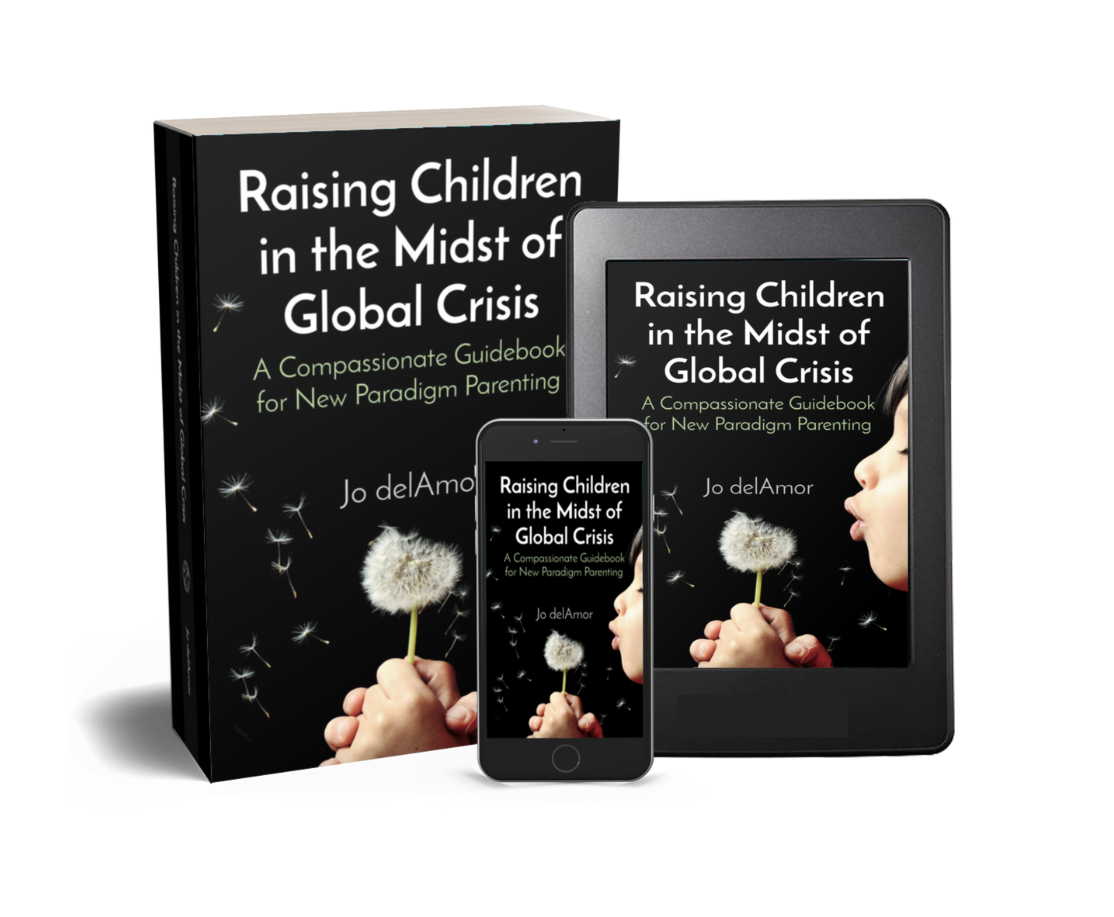
February 24, 2024 – In this time of pervasive social, economic and environmental collapse, caring for our youngest generation and the ones yet to be can weigh heavy on our hearts. Drawing from the wisdom of the Work That Reconnects and over twenty years of experience supporting children and their families, Jo delAmor has developed a body of work that invites us to embrace caring for children as an exciting and powerful opportunity to contribute to the radical paradigm shift being called forth by these converging crises.

Raising Children in the Midst of Global Crisis moves us through the Work That Reconnects spiral as we ground ourselves in the subversive nature of gratitude, develop our emotional fluency, nurture thriving life qualities in our households, tend to our intergenerational traumas and partner with our children in meaningful ways, as we rise with them to meet this unique moment in history.

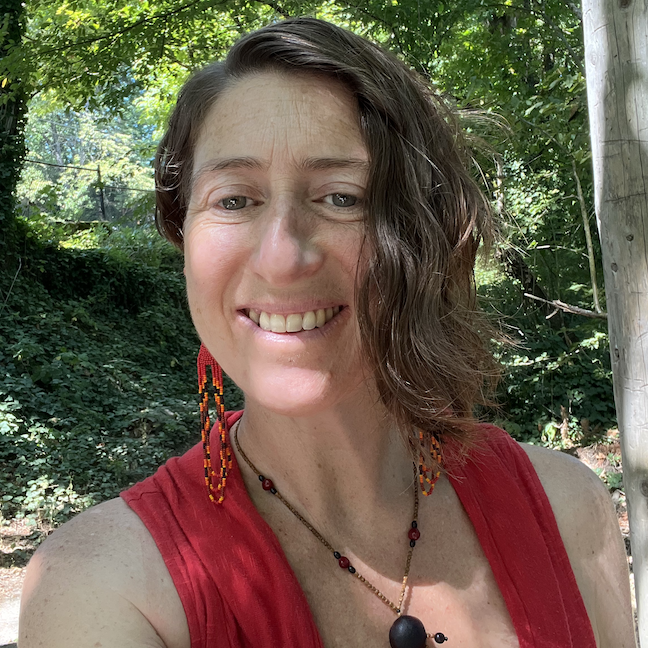
Jo delAmor is a mother, coach and Work That Reconnects facilitator who has dedicated over twenty years to the care of children and their families. She is the author of Raising Children in the Midst of Global Crisis: A Compassionate Guidebook for New Paradigm Parenting. She has been facilitating the Work That Reconnects since 2013 with a focus on dismantling oppression, transforming our cultural paradigm and supporting parents through these unprecedented and challenging times. She has led dozens of parents from around the world through her signature group program: Parenting in Tumultuous Times – a practical, engaging and supportive program for parents looking to do right by their kids in these times of converging global crises. She has also been one of the core staff members of the Work That Reconnects Network since 2019.

Jo is on a lifelong journey of remembrance and reconnection that is guided by being a mother, a caregiver, a grower of food, a spinner of wool, a maker of beauty and a disciple of Life. Learn more about Jo and her work at http://www.RadiantBalance.com

Award-winning songwriter, Folkgoddess Diane Patterson subverts the dominant paradigm with rocking acoustic guitar and ukulele, a mighty pen, and a woman’s voice. Since 1989, Patterson weaves her original Mystic Acoustic Americana music and unifying stories, planting seeds of love and revolution.

Holding the Fire Podcast with Dahr Jamail

Award-winning journalist and author Dahr Jamail hosts in-depth interviews with leaders from around the world to uncover Indigenous ways of reckoning with environmental and societal breakdown. Produced by Post Carbon Institute and hosted by Resilience.

Molly Young Brown on The Great Turning

What if we started with gratitude? With love? In this episode Ayana Young, host of For The Wild is joined by longtime mentor Molly Young Brown in a discussion that tends to what it means to be human in times of polycrisis and unraveling.

Poetry Section at the Deep Times Journal

You can find dozens of poems organized under the categories of the spiral at our Deep Times Journal, a bi-annual publication of the Work That Reconnects Network.